
Psychology & Discipline

Trading success is often described as 80% psychology and 20% strategy. Markets are designed to exploit human emotions — fear drives panic selling at bottoms, greed fuels chasing rallies at tops, hope keeps losing positions open too long, and regret leads to revenge trading after losses.
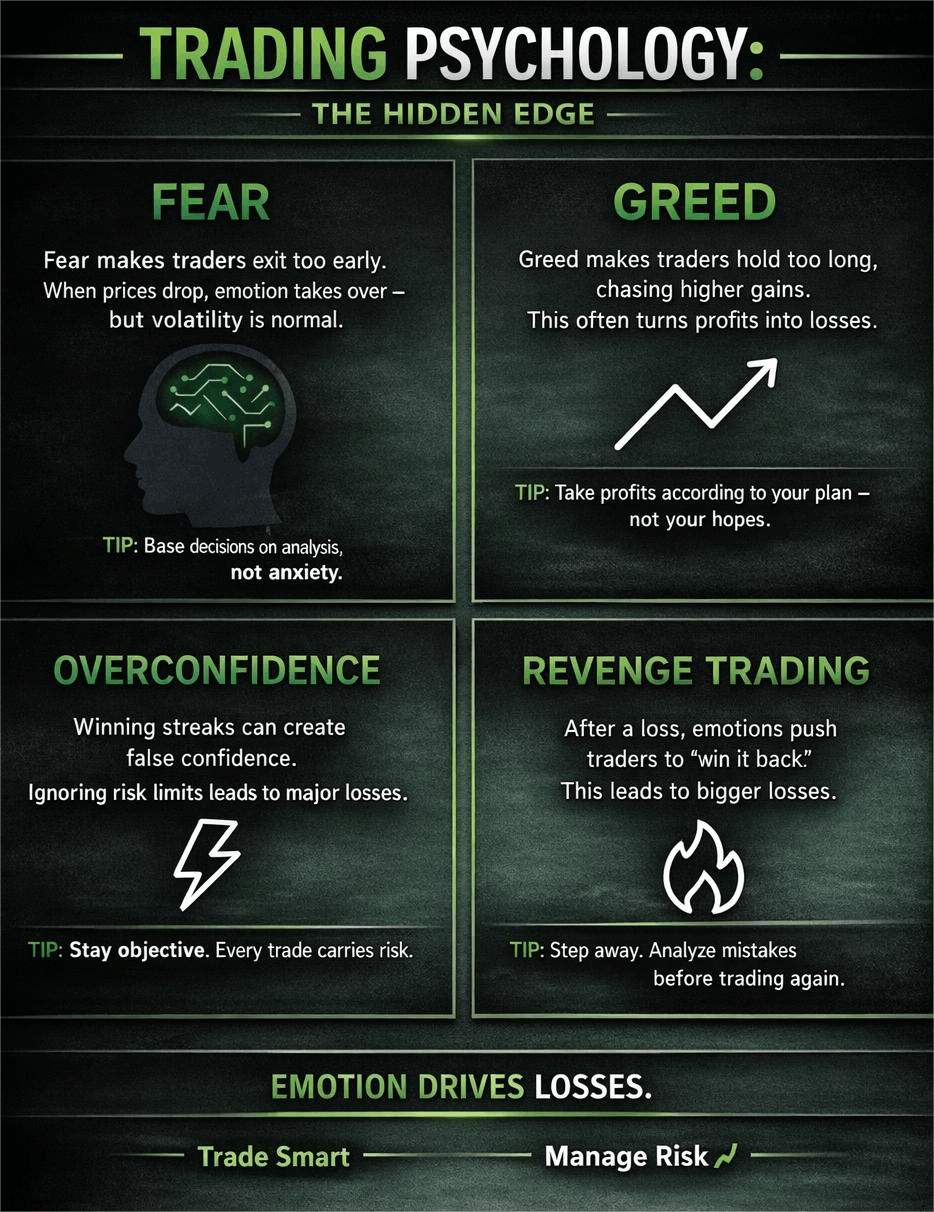
Controlling Emotions in Trading

Emotions amplify every mistake: fear triggers premature exits on winning trades or holding losers hoping for reversal; greed prompts oversized positions or ignoring risk rules. Proven techniques to build emotional resilience include:

Emotional Resilience Techniques

  • Maintaining a detailed trade journal to review what went right/wrong objectively.
  • Establishing strict, predefined rules for entries, exits, stops, and position sizes before the market opens.
  • Taking mandatory breaks after consecutive losses or big wins to reset mindset.
  • Practicing  mindfulness, meditation, or breathing exercises to remain present and detached from price fluctuations.

Avoiding FOMO & Overtrading

Fear Of Missing Out (FOMO) pushes impulsive entries during hype cycles or trending moves without confirmation, often leading to buying highs and selling lows. Overtrading — excessive entries/exits — racks up commissions, spreads, slippage, and mental fatigue.

Counter Strategies

  • Curating a focused watchlist of only high-conviction setups that meet your criteria.
  • Waiting patiently for full confirmation (e.g., volume breakout, candle close above resistance).
  • Embracing the reality that  missing some opportunities is normal  and better than forcing bad trades.

Trading Mindset for Beginners

Approach trading with realism from day one: losses are inevitable (even the best have 40–60% win rates), so focus relentlessly on process over short-term profits. Treat trading like a professional business — track key metrics (win rate, risk-reward, expectancy), conduct regular performance reviews, start with small position sizes to build confidence, and prioritize continuous education without rushing into live capital.

Process Over Profits

Focus on executing your strategy correctly rather than obsessing over individual trade outcomes. Consistency in process produces consistency in results over time.

Continuous Education

Markets evolve constantly. Commit to lifelong learning — study new strategies, review past trades, and stay updated on market dynamics without rushing into live capital.

How to Stick to a Trading Plan

A written trading plan is your anchor in volatile markets. It should clearly define: entry/exit criteria, risk per trade (1–2%), position sizing rules, daily/weekly routines, and performance review protocols.

Strengthen Adherence

  • Using pre-trade checklists to verify alignment with your plan before every entry.
  • Setting automated alerts or orders where possible to remove impulsive decisions.
  • Holding yourself accountable through journaling, weekly self-reviews, or sharing progress with a trusted peer or accountability partner.

Trade With Discipline, Not Alone

Even legendary investors and professional traders have gone through phases of struggling with discipline, emotional trading, and costly mistakes early in their careers. What separates “smart” investors from the crowd is recognizing that emotional attachment to trades is a major edge-killer. Instead of battling personal psychology alone — which can take years of painful experience — they detach emotionally by following proven signals from experts or co-trading alongside seasoned professionals.

In our exclusive community, you gain exactly that advantage: access to signals and guidance from Professor Jan Hatzius — an elite thinker who passionately believes financial knowledge and high-quality opportunities should be available to everyone, not just the privileged few. The community is completely free and vision-driven, focused on sharing expertise, providing real-time professional signals, and fostering collaborative support.
Why spend years fighting the same psychological battles solo when you can align with expert-level execution from the start?