
Trading approaches vary by time horizon, risk tolerance, and commitment level. Choosing the right one aligns with your goals, lifestyle, and access to reliable insights. Here’s a clear breakdown of the main styles.
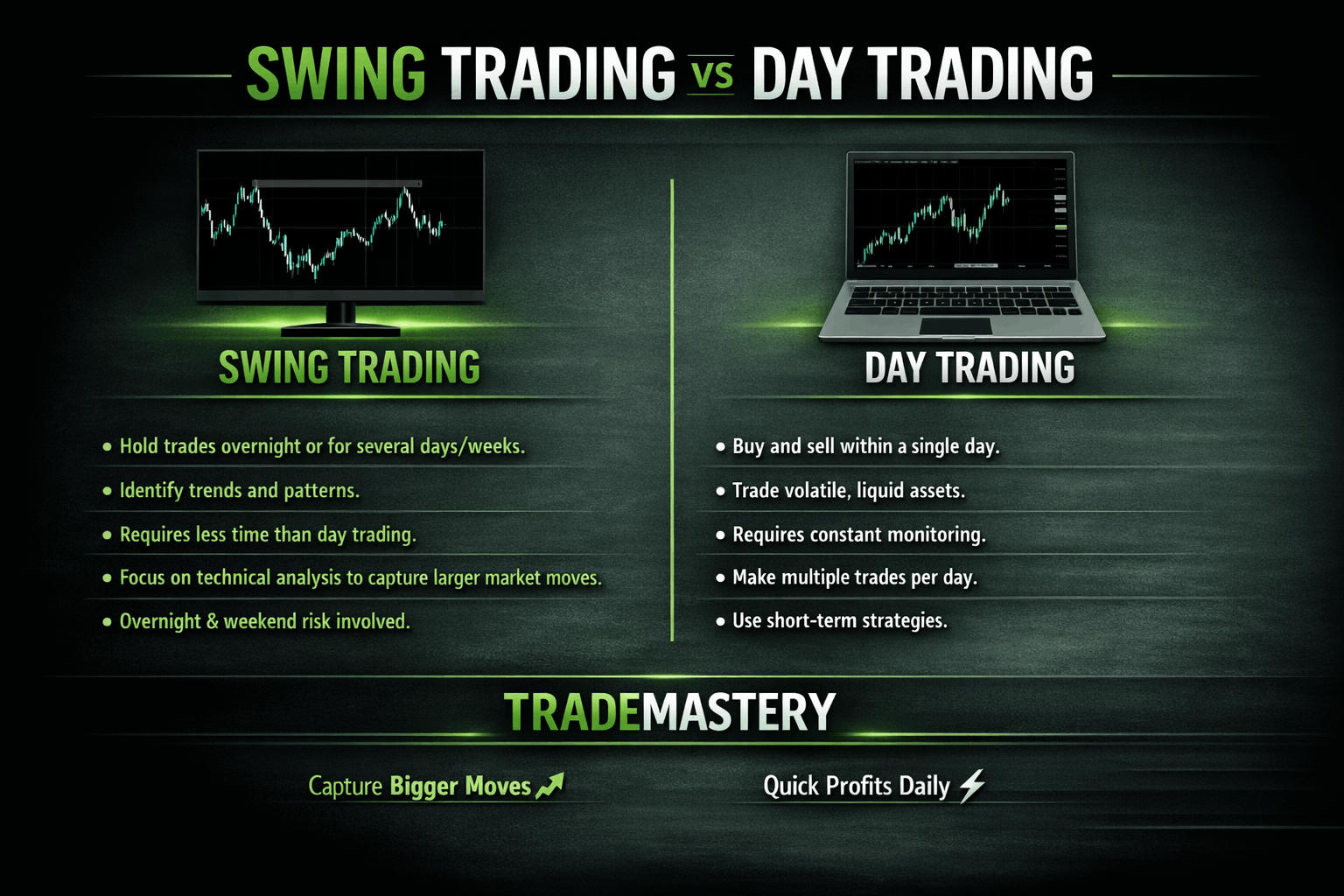
Opening and closing positions within the same trading day, capitalizing on short-term price fluctuations. It requires constant screen time, quick decisions, and high emotional control — ideal for those who thrive in fast-paced environments but demanding due to transaction costs and stress.
Holding positions for several days to weeks, aiming to capture “swings” in trends or momentum. It offers more flexibility than day trading (less screen time) while still targeting meaningful moves, often using technical analysis for entries/exits.
Each style has unique risk-reward profiles — day and swing trading demand precise timing and discipline, while long-term investing rewards consistency and patience. Many successful participants combine elements or evolve their approach over time.
It works well in trending markets but can produce false breakouts in choppy conditions — risk management is key to filtering high-probability setups. Volume confirmation and retests of the breakout level add reliability.
“The trend is your friend” — this strategy identifies and rides established market directions using tools like moving averages, trendlines, or indicators (e.g., MACD, ADX). Positions are held as long as the trend persists, with trailing stops to lock in gains.
It excels in strong directional markets and avoids counter-trend fighting, though whipsaws in ranging markets require discipline to cut losses early.
It's intense and suits those with fast execution platforms — but slippage, fees, and emotional fatigue can erode edges without strict rules.
A cornerstone of wealth building, this passive approach involves selecting quality assets (e.g., strong companies or indices) and holding through volatility for long-term growth. It minimizes trading costs, reduces emotional interference, and leverages compounding. Legendary investors like Warren Buffett exemplify its success when combined with thorough research and patience.
Whether you’re drawn to active day trading or patient long-term investing, having expert guidance and a supportive community makes all the difference. Join us for professional signals, strategy breakdowns, and real-time market insights.